Why more and more homeowners are switching to photovoltaics:
Electricity prices have been rising for years, and there's no real relief in sight...
With a PV system, you turn the tables: you produce your own electricity exactly where you need it. The result: lower costs, more control, and the good feeling of being independent.
▪ Up to 70 % less in electricity costs through self-consumption
▪ Long-term plannable energy costs
▪ Independent of the energy provider
▪ Increasing property value
▪ Sustainable & Clean Energy Production
▪ Attractive feed-in tariff for surplus electricity





This is how photovoltaics works
Clean electricity. Smartly used.

Which roofs are suitable for a PV system?
Modern systems can be flexibly adapted to almost any roof type. Even with east or west orientation, a system can be operated economically.

Tiled roof

Flat roof (bitumen / membrane)

Corrugated metal or sandwich roofs

Carports & Roofs
Generate your own electricity – directly on your roof!
Lower electricity costs, become independent. Photovoltaics for your home.
Harness the power of the sun and turn your home into its own energy source. With a modern photovoltaic system, you can reduce your electricity costs in the long term and become less dependent on rising energy prices.
Solar power has never been as attractive as it is today:
▪ Tax advantages for private investments
▪ Declining system costs
▪ Rising electricity prices
The sooner you start, the more you'll save in the long run.
10 Strong Reasons to Choose AVP GmbH...
Because we deliver more than just photovoltaics – we create sustainable energy independence. With experience, passion, and precision, we transform your spaces into powerful energy sources and guide you from planning to implementation. Choose AVP GmbH and experience how solar energy becomes real independence.
Economic viability with proof: Measurable results instead of promises – with guaranteed performance and clear amortization.
Long-term availability: We think in decades with lasting care and stable, long-term partnerships.
Already over
Years of experience & expertise in renewable energies
Technical Sovereignty In-house system expertise instead of manufacturer-
Dependency – for full control over your energy future.
Technical Sovereignty In-house system expertise instead of manufacturer dependency – for full control over your energy future.
Maximum energy yield Planning by yield per square meter. For maximum cost-effectiveness of every area.
FAQ – 10 Frequently Asked Questions
No suitable answer found?
Please contact us—we'd be happy to help.
Around 5–7 m² of roof space are needed per kWp of performance. For a typical single-family home with 5–10 kWp, you should therefore plan for around 30–70 m² of free space.
A south-facing orientation yields the highest output, but east-west-facing roofs also make economic sense because they generate electricity more evenly throughout the day. Ideal for self-consumption.
Partial shading can affect individual modules. However, losses can be significantly reduced with modern technology such as optimizers or module interconnection.
Yes, a static load test is advisable. In most cases, roofs are suitable without issue, but the load-bearing capacity should be confirmed in advance, especially with older buildings.
After planning and approval, installation is usually completed within 1-3 days. The system is then connected and registered with the grid operator.
Generally no, as PV systems on roofs are exempt from permits. Exceptions apply in cases of monument protection or special building regulations.
Yes, with a wallbox, you can charge your electric car directly with solar power. This significantly reduces your mobility costs and makes you even more independent.
Very low. PV systems require almost no maintenance. An occasional visual inspection and, if necessary, cleaning in case of heavy soiling is usually sufficient.
Standard systems shut down for safety reasons. However, with an emergency power or backup system, you can continue to power parts of your household.
Yes, many systems are modular. Expansion is possible, but it should be planned in a technically and economically sensible way.
Our team is here for you!
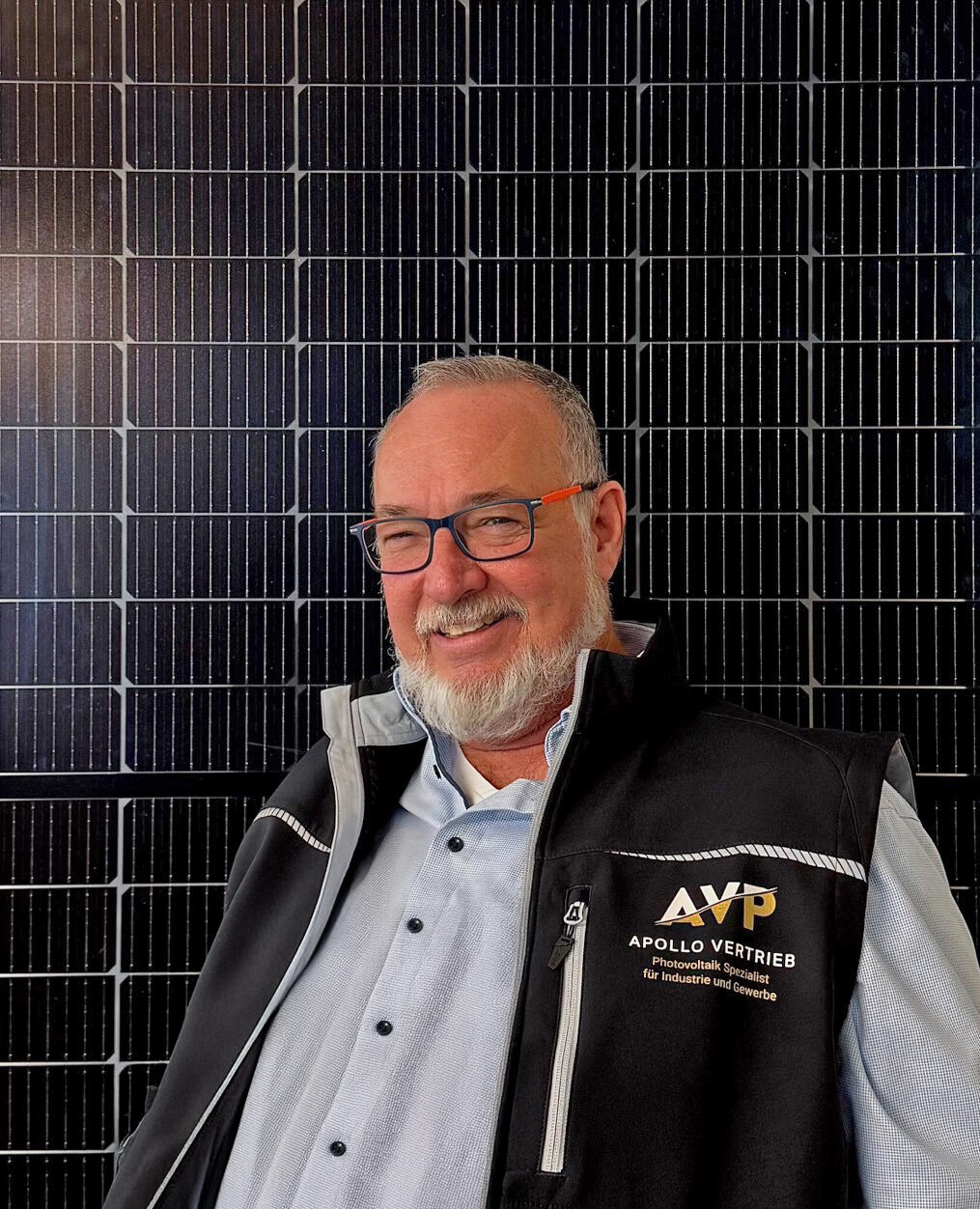
Contact Person: Helmut Burkhardt
- Am Hasenbiel 26-28 | 76297 Stutensee